
U.S. STUDENTS WALK OUT TO PROTEST IMMIGRATION ENFORCEMENT
Students from multiple states are staging walkouts during the school day to protest U.S. Immigration and Customs Enforcement (ICE) policies, particularly heightened enforcement actions under the Biden and Trump administrations. Teens have cited concerns about detentions, deportations, and the impact of federal ICE raids on immigrant families in their communities. The movement has spread through school districts in Texas, Minnesota, Kansas, California, and beyond.
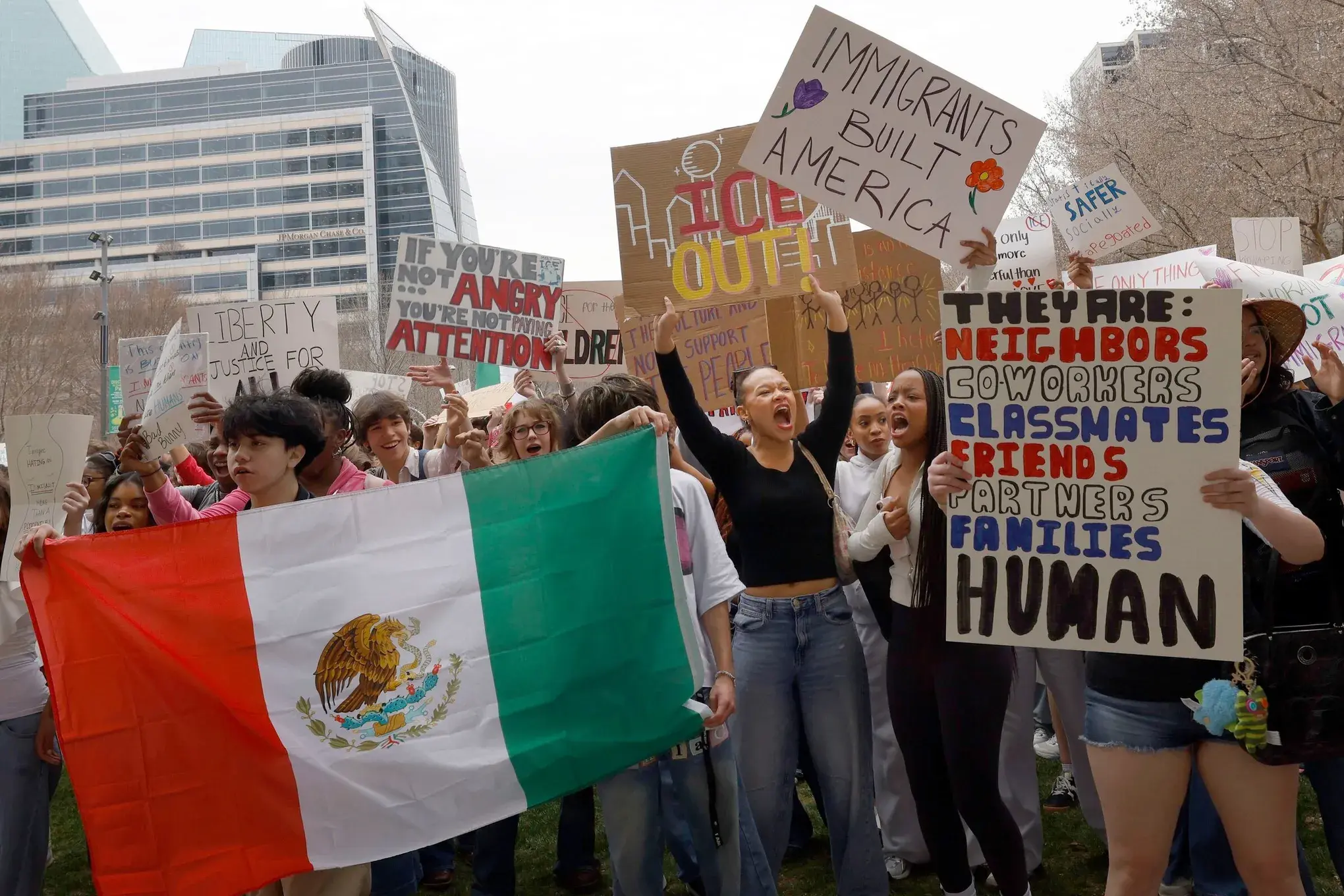
Across the country, students have organized peaceful protests by leaving classrooms en masse — often gathering at nearby parks, justice centers, or civic spaces with handmade signs calling for immigration reform and opposing ICE activity.
HOW AND WHERE STUDENTS ARE PROTESTING
In Texas, walkouts have taken place in North Texas, including in Plano, Dallas‑Fort Worth suburbs, and Houston area school districts, where students marched, chanted and held signs outside campuses during school hours.
Similar demonstrations have taken place in other parts of the country. For example:
- In Lawrence, Kansas, students held a walkout to protest ICE, chanting slogans emphasizing immigrant rights.
- In Carson, Los Angeles, high schoolers walked out to join nationwide protests tying immigration enforcement to broader social concerns.
Organizers say the protests are driven by solidarity with immigrant communities, personal connections to families affected by deportations, and broader frustration with immigration enforcement tactics.
STATE RESPONSE: TEXAS CRACKDOWN AND THREATS
While civil liberties organizations emphasize students’ First Amendment rights to protest peacefully, state officials in Texas have taken a markedly stricter stance.
- Gov. Greg Abbott and the Texas Education Agency (TEA) have warned that students, teachers, and even entire school districts could face consequences if walkouts occur during instructional hours.
- Threats include stripping state funding from schools where protests take place, sanctioning educators who are seen as facilitating activism, and investigations into school leadership practices.
- Attorney General Ken Paxton has demanded internal documents from the Austin Independent School District as part of an investigation into allegations that administrators knowingly allowed protests, framing it as an imposition of a “radical political agenda.”
State officials argue maintaining classroom instruction and order is critical and that protests during school hours disrupt educational operations. Some leaders assert that students don’t have an unrestricted right to leave class to protest while school is in session.
THE FREE SPEECH DEBATE
The clash has revived discussions about the boundaries of student free speech.
Legal experts and civil rights advocates say that peaceful protest — including walkouts — is a form of political expression protected under the First Amendment, especially when students remain peaceful and organized. Civil liberties groups like the American Civil Liberties Union of Texas argue that punitive policies “go beyond routine discipline” and risk retaliating against students for expressing their views.
However, some educators and historians note that school officials may enforce attendance and operational rules, arguing that leaving class without permission could qualify as unexcused absences and is not constitutionally protected if it disrupts the educational program.
CONSEQUENCES FOR STUDENTS AND SCHOOLS
In many districts, students who participate in walkouts are being marked with unexcused absences, which can carry academic penalties.
In Texas, officials have also warned of broader disciplinary risks:
- Loss of daily attendance funding for districts.
- Possible revocation of teacher certifications for educators seen as encouraging walkouts.
- State takeovers of districts alleged to have permitted activism.
- Calls for arrests of some students deemed disorderly by the governor.
These potent threats have prompted concern among parents and civil rights advocates who argue some consequences exceed normal school discipline.
SUPPORT FOR AND OPPOSITION TO THE PROTESTS
Students organizing walkouts often cite personal connections to those affected by immigration enforcement, with some recounting relatives’ deportations or ICE encounters as motivation. Supporters of the protests emphasize solidarity, civic engagement, and the importance of speaking out on issues that impact families and communities. For many students, the demonstrations are a way to engage politically before they reach voting age. Conversely, some parents and community members express concern about safety and academic disruption. A few argue that demonstrations should occur outside school hours, suggesting that walkouts could expose students to unsafe environments and divert them from education.
WIDER CONTEXT: NATIONAL MOVEMENT
This wave of protests is part of a nationwide movement. Students in Minnesota, Kansas, California, Maryland, and other states have engaged in similar actions over the past month, sometimes coordinated via social media and community networks.
While methods vary — from walkouts to rallies outside campuses — the overarching theme remains consistent: youth voices opposing federal immigration enforcement policies that they see as harming families and communities.
The debate over student rights, school discipline, and state authority is likely to continue as protests persist and local leaders respond. Some students say they plan to keep organizing regardless of potential consequences, while others consider alternative ways to express their positions outside the school day.
For educators and administrators, balancing support for student expression with obligations to enforce attendance and safety rules remains a delicate challenge. As the national conversation around immigration enforcement and civic activism evolves, schools may find themselves at the center of broader debates about youth involvement in political issues.