
T he annual Munich Security Conference (MSC) — long a central gathering for global security dialogue — offered perhaps its most telling snapshot yet of how Donald Trump’s return to the White House has reshaped both domestic political calculations in the United States and strategic thinking in Europe. After two years of Trump’s second term, critics inside his own party and allied leaders abroad are warning that the traditional role of the United States as a stabilizing force in global affairs has been fundamentally weakened, and that finding a path forward will be neither quick nor simple.
Democratic leaders attending the conference — including potential presidential contenders — described a scene markedly different from years past, underlining that European officials were more skeptical than ever about U.S. commitment under Trump. At the same time, European leaders signaled a growing determination to chart their own strategic course rather than rely on Washington as they once did.
A Conference Marked by Realignment and Unease
Absent from the main stage this year were some of the perennial American voices that once helped anchor the post‑World War II security order. Leaders who traditionally used Munich as a platform to articulate U.S. commitments were replaced by opposition figures and lesser‑known congressional members. One attendee observed that the contrast between the 2017 conference — when figures like the late John McCain embodied transatlantic alliance support — and this year’s gathering was stark, symbolizing a shift in how American leadership is perceived.
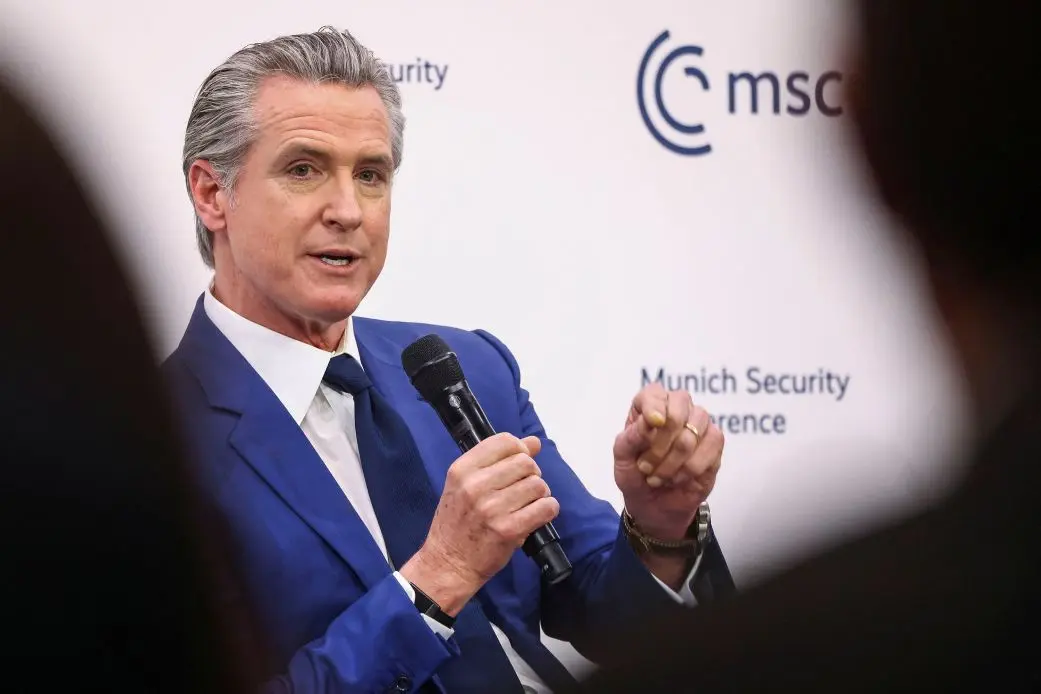
California Gov. Gavin Newsom, a leading Democratic voice, conceded in a CNN interview that many European leaders view the damage to the alliance as “irrevocable” and expressed concern that the United States is no longer seen as a reliable partner.
Democrats Struggle Abroad and at Home
Many Democratic lawmakers and officials who attended the conference were there not in their capacity as administration leaders — but as potential future presidential candidates. Figures such as Rep. Alexandria Ocasio-Cortez and Sen. Mark Kelly sought to reassure international audiences about U.S. stability while trying to stitch together a coherent foreign policy platform for 2028.
Yet some struggled to articulate positions that resonated credibly on the international stage. Ocasio‑Cortez’s responses to questions on core U.S. policy issues highlighted how unprepared some U.S. leaders are for the diplomatic realities outside domestic politics. That disconnect underscored the broader difficulty Democrats face: redefining American leadership while also addressing domestic political priorities that often diverge from long‑standing international commitments.
Europe’s Growing Strategic Independence
European leaders appeared increasingly comfortable acknowledging that the transatlantic partnership is in a new era — one no longer centered on unchallenged U.S. leadership. At the same conference, Ursula von der Leyen , President of the European Commission, vigorously rejected U.S. claims that Europe is facing “civilisational erasure,” instead emphasizing European resilience and appeal in global affairs.
Meanwhile, statements by German Chancellor Friedrich Merz and others signaled deeper efforts to strengthen European defense capabilities and strategic autonomy. Talks ranged from increases in joint spending to discussions of a European nuclear deterrent — topics that a decade ago would have been largely hypothetical.
Transatlantic Rift: Blunt Rhetoric and Cautious Diplomacy
While Secretary of State Marco Rubio attempted to soften tensions with remarks emphasizing enduring transatlantic ties and shared interests, Europe’s leaders responded with guarded optimism, acknowledging common values but making clear they will no longer take U.S. support for granted. Analysts noted that this new approach — part reassurance, part recalibration — reflects recognition on both sides of the alliance that the relationship has shifted. Europeans are increasingly receptive to partnerships that are more transactional and less reliant on historic assumptions about U.S. global leadership.
A Strategic Challenge for the Democrats
One of the biggest political dilemmas for Democrats is how to translate this global uncertainty into a compelling offering that resonates with American voters. Newsom, while urging strength as a core national attribute, told audiences that Americans may still choose “strong and wrong versus weak and right,” a sobering reflection on domestic political priorities that could affect foreign policy choices.
Democratic leaders have argued that the Trump administration’s approach — especially its rollback of environmental protections and confrontational rhetoric toward allies — has weakened U.S. moral and political authority abroad. Yet translating criticism into a coherent alternative strategy remains elusive, especially when global audiences are watching for concrete commitments rather than campaign rhetoric.
Redefining the Transatlantic Compact
Europe’s reaction to the new reality is both pragmatic and forward‑leaning. Leaders from France, Germany, and the United Kingdom have reiterated that Europe must assume more responsibility for its own defense and strategic autonomy, even as it seeks to preserve cooperation with the United States. That pivot marks a significant departure from the post‑1945 security paradigm. Yet there is no consensus in Europe regarding how far that autonomy should extend. Some leaders still see deep alignment with Washington as essential for addressing global challenges like Russia’s war in Ukraine and rising tensions with China. Others are calling for a more diversified set of security partnerships that do not automatically default to U.S. leadership.
Long‑Term Consequences
The broader political implications of this shift may be profound. A former era in which American elections had immediate reverberations across Europe — with clear expectations for policy continuity — has given way to strategic uncertainty. That uncertainty complicates European planning on defense, trade, and foreign policy priorities, especially as geopolitical competition intensifies.
For Democrats, the task in the coming years will be to articulate not just opposition to Trump’s policies but a clear vision of what American leadership should look like in a multipolar world. Doing so will require bridging domestic political divides, strengthening alliances, and offering concrete strategies on issues ranging from climate and trade to defense and human rights.