
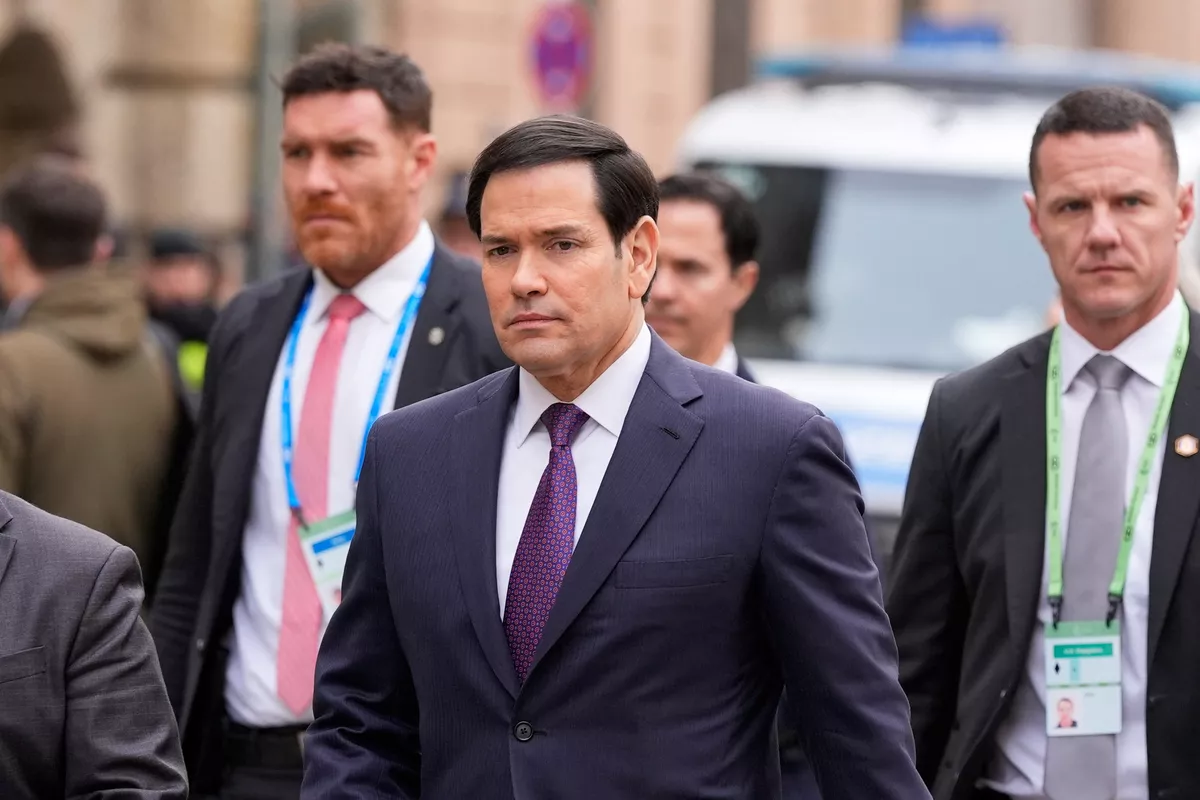

U.S. Senator Marco Rubio has framed the United States as the �child of Europe� and a necessary �critical friend� to its allies, calling for a more candid and balanced transatlantic relationship as Washington and its partners navigate rising geopolitical and economic pressures.
Speaking at a policy forum focused on U.S.-European relations, Rubio argued that historical ties bind the United States and Europe not only through shared values, but through shared responsibilities. While reaffirming America�s commitment to its allies, he said close partnerships require honesty � including the willingness to challenge one another when interests diverge or when allies fall short of collective goals.
�The United States did not emerge in isolation,� Rubio said. �Our political traditions, legal systems, and democratic ideals were shaped by Europe. In that sense, America is very much Europe�s child � but one that has grown into a global power with its own obligations and expectations.�
A call for realism in alliances
Rubio�s remarks come amid renewed debate in Washington over the cost, scope, and sustainability of U.S. global leadership. While the senator stressed that alliances remain central to American security, he pushed back against what he described as complacency within parts of Europe on defense spending, energy security, and strategic readiness.
He argued that being a �critical friend� means confronting difficult issues directly, rather than allowing disagreements to fester beneath diplomatic niceties. Rubio pointed to NATO burden-sharing as a recurring concern, saying long-standing commitments must be matched by tangible contributions.
Foreign policy analysts note that Rubio�s framing reflects a broader shift in U.S. political discourse, where support for alliances increasingly comes with sharper expectations � regardless of party affiliation.
Shared values, evolving challenges
Rubio emphasized that transatlantic ties are rooted in shared democratic principles, including the rule of law, free markets, and individual liberties. However, he warned that these values face mounting pressure from authoritarian governments seeking to reshape the global order.
He cited geopolitical tensions, economic coercion, and technological competition as challenges that require deeper coordination between the U.S. and Europe. According to Rubio, failure to adapt alliance structures to modern realities could weaken collective influence at a time when unity is most needed.
�History doesn�t stand still,� he said. �Alliances that succeed are those that evolve.�
Economic and security dimensions
Beyond military cooperation, Rubio highlighted economic resilience as a critical component of transatlantic strength. He pointed to supply chain vulnerabilities, industrial policy disputes, and differing regulatory approaches as areas where misalignment could undermine shared objectives. Rubio urged closer consultation on trade, technology standards, and investment screening, particularly in sectors tied to national security. He argued that coordination, rather than competition among allies, is essential to counter external economic pressure and protect strategic industries.
Experts say such remarks reflect growing concern in Washington about balancing open markets with national security � a debate mirrored in European capitals.
Europe�s response and broader implications
European officials have acknowledged the need for greater self-reliance, particularly in defense, but have also cautioned against rhetoric that could be perceived as transactional. Diplomats note that while criticism from allies can be constructive, tone and consistency matter in maintaining trust.
Rubio sought to address such concerns by stressing that criticism does not signal disengagement. Instead, he said, it reflects the seriousness with which the U.S. views its alliances. �You don�t challenge partners you don�t care about,� he said.
The remarks come as the United States and Europe face overlapping crises, from regional conflicts to economic uncertainty, testing the resilience of post�World War II institutions.
Positioning ahead of future debates
Rubio�s comments are also seen as part of a broader effort to shape Republican foreign policy thinking ahead of future legislative and electoral battles. Long regarded as a foreign policy hawk, he has sought to balance calls for strength abroad with growing domestic skepticism toward international commitments.
By casting the U.S. as both heir to Europe and its candid partner, Rubio attempted to bridge traditional Atlanticism with a more assertive, interest-driven approach to alliances.
Political analysts say the framing could resonate with voters who value international leadership but demand clearer returns on U.S. engagement overseas.
A relationship under scrutiny
As global power dynamics shift, the U.S.�Europe relationship faces increased scrutiny from both supporters and critics. Rubio�s remarks underscore a central tension: how to preserve deep historical ties while adapting to new strategic realities. Whether allies embrace the idea of America as a �critical friend� may depend on how such rhetoric translates into policy. For now, Rubio�s message highlights a growing consensus in Washington that alliances remain vital � but not beyond question.