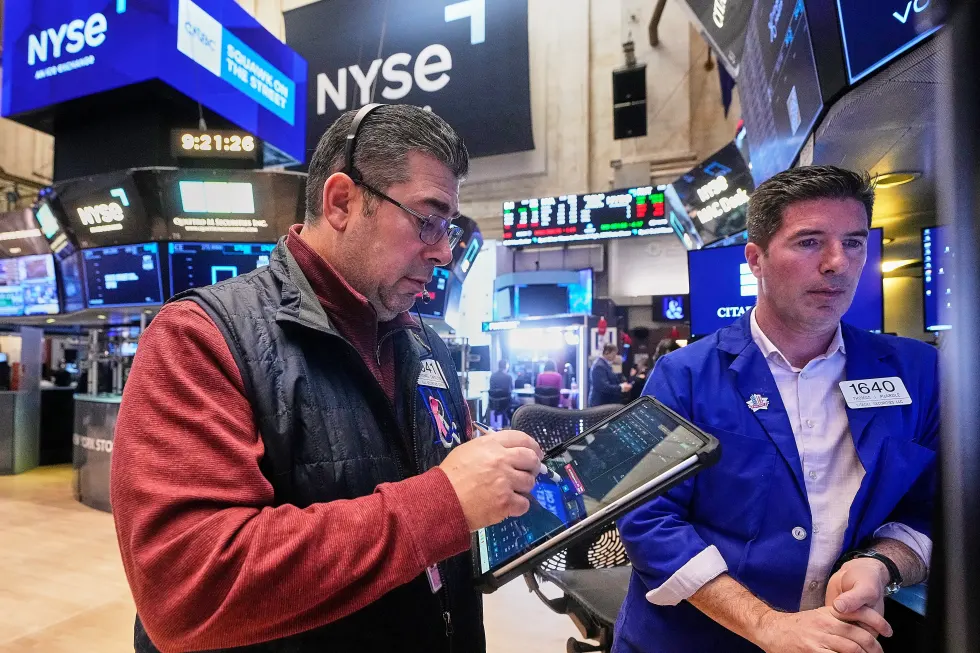

T he Nikkei 225, Japan's benchmark, sank 1.8% to 52,870.15 on Monday due to selling of major exporters, including Toyota Motor Corp., whose shares plunged 4%. South Korea's Kospi fell 0.7% at 4,955.79. Hong Kong's Hang Seng fell less than 0.1% to 26,735.54, while the Shanghai Composite rose 0.1% to 4,141.31. Australian, New Zealand, Indian, and Indonesian markets were all closed. On Friday, equity markets were mixed following Wall Street's soft lead.
Tokyo fell over 2% due to the rising yen, which weighs on Japanese exporters, while Singapore, Seoul, and Wellington also declined. Hong Kong, Shanghai, Taipei, and Manila all rose.
Why This News Matters:
Big things like currencies, central banks, and geopolitics have a bigger effect on Asian markets than company fundamentals.
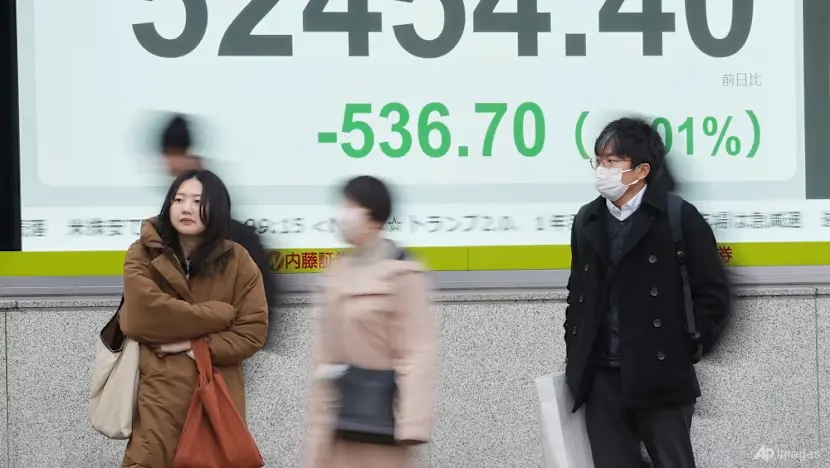
The unexpected surge of the yen frightened Japanese exporters and hit markets in Tokyo. Investors in the area were especially careful since Wall Street was sending contradictory signals and tensions were increasing throughout the world. It's apparent that traders are avoiding risk and placing safety ahead of growth because gold prices are going up and oil prices are going up and down.
Yen Surge and Currency Intervention Speculation
A weak currency is generally beneficial to Japanese exporters since it increases the value of their overseas profits. In recent months, the dollar has strengthened against the yen. It plummeted substantially in recent days after officials in Japan and the United States signaled that they were willing to act to strengthen the yen. Although finance authorities did not openly disclose such an intervention, they did affirm that they were working closely with the United States to address currency swings.
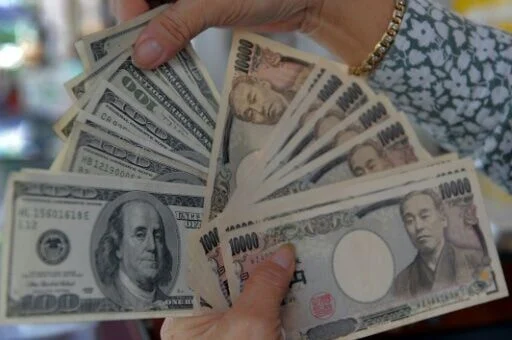
�Intervention chatter did the trick. Since Friday, the yen has staged a sharp rebound on expectations that Japanese authorities � possibly with U.S. coordination � would step in.� said Ipek Ozkardeskaya, a senior analyst at Swissquote. The dollar fell to 154.27 Japanese yen from 155.01 yen. It traded around 158 yen last week. The dollar sank in Asian trade Monday, on speculation that US officials might join their Japanese counterparts to boost the yen following a recent sell-off.
Reports that the Federal Reserve Bank of New York had checked in with dealers regarding the yen's exchange rate spurred a jump in the Japanese currency, which climbed more than 1% to 153.89 per dollar, its highest level since November. The last time Japanese officials intervened to protect their currency was in 2024, when it reached 160 to the dollar. Top currency head Atsushi Mimura sparked talk of joint action on Monday, saying Tokyo "will continue responding appropriately against FX moves, working closely with US authorities as needed, in line with the joint statement issued by the Japanese and US finance ministers last September". His comments come a day after Japanese Prime Minister Sanae Takaichi stated, "We will take all necessary measures to address speculative and highly abnormal movements."
Federal Reserve and Interest Rate Expectations
The Federal Reserve's next opportunity to change the short-term interest rate it regulates will be on Wednesday. The market anticipates that it will remain constant. The latest changes come ahead of the Fed's next policy meeting this week, which is expected to see officials maintain interest rates after cutting them in the previous three meetings.
- Rates stay steady
- Fed data-dependent
- Policy unchanged
- Political pressure
"We don't expect to learn a lot at the January FOMC meeting. The Fed is on hold but remains data dependent. The balance of risks around the two mandates hasn't changed much since December," "Chair Powell's press conference might be dominated by questions about politics rather than policy. On the latter, however, market pricing creates risks of a dovish surprise." Trump has made no secret of his dislike for Powell, stating that there is "no inflation" and constantly criticizing the Fed chairman's competency and integrity.
Geopolitics, Trade Tensions and Tariffs
Canadian Prime Minister Mark Carney responded to U.S. President Donald Trump's threat to put a 100% tariff on goods from Canada. Trump has threatened to increase tariffs if Canada negotiated a free trade agreement with China. Carney stated that Canada had no plans for such a pact. In 2024, Canada mirrored the United States by imposing a 100% tariff on electric vehicles from Beijing and a 25% tariff on steel and aluminium.
China replied by levying 100% import duties on Canadian canola oil and meal and 25% on pork and shellfish. Carney broke with the US last month during a visit to China, lowering its 100% tariff on Chinese electric vehicles in exchange for reduced duties on Canadian imports.
Canada�China trade tensions escalated over tariffs.
Commodities: Oil and Precious Metals
In other trading on Monday, benchmark US crude increased 43 cents to $61.50 per barrel. Brent crude, the worldwide benchmark, moved up 48 cents to $65.55 a barrel. Oil prices rose about 3% on Friday after Trump announced that a US "armada" was moving toward the Gulf and that Washington was keeping a close eye on Iran
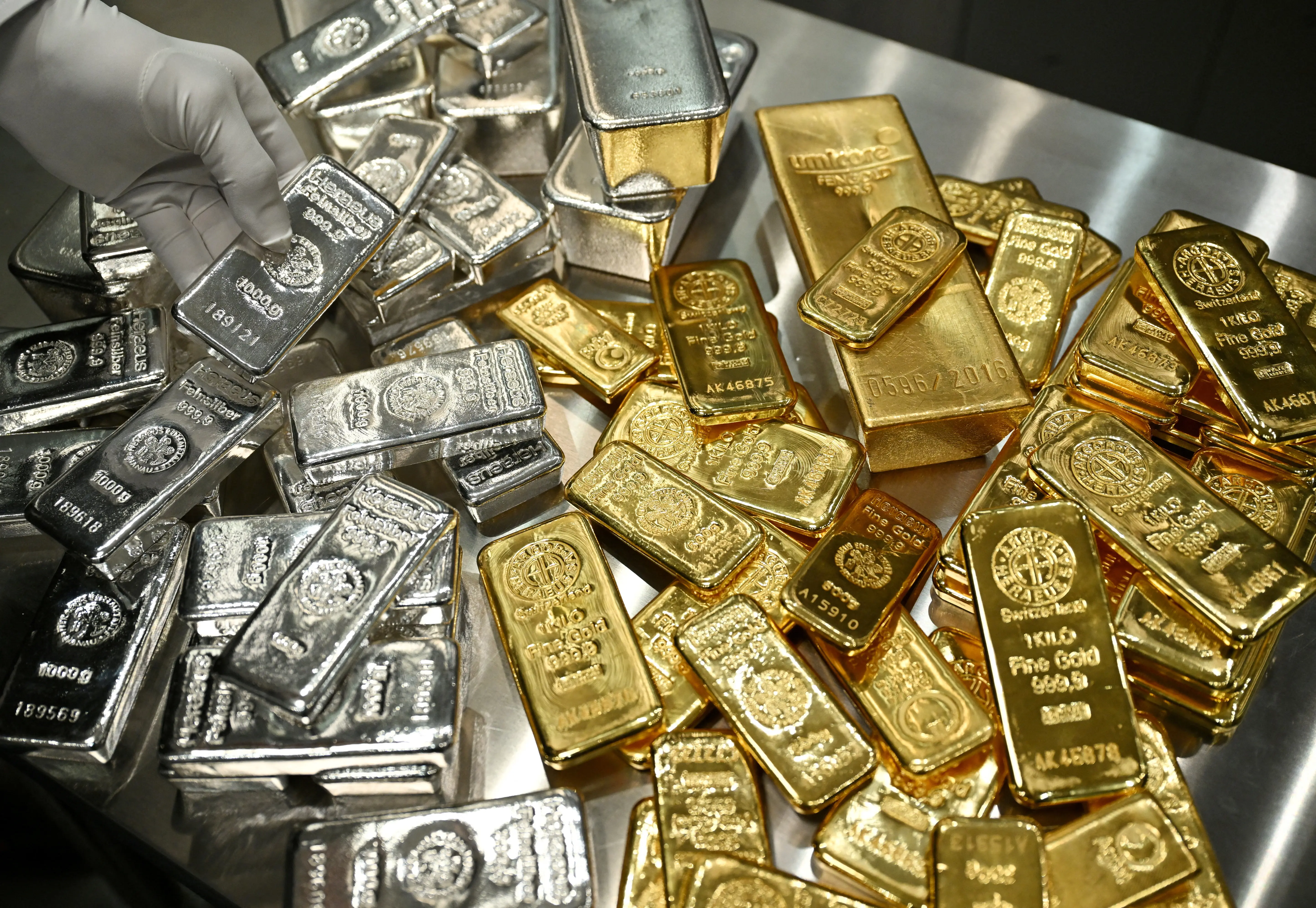
Gold rose 2% to more than $5,100 per ounce. Gold prices rose about 2%, surpassing $5,000 for the first time. The declining dollar helped gold reach a high of $5,088.52 per ounce. Silver rose 7% to $108.39 per ounce and surpassed $108 this week. The value of precious metals has risen in recent months as investors seek relatively safe investments.
- + Oil prices rose, with US crude and Brent gaining after geopolitical tensions.
- + Trump�s comments on Iran pushed oil prices up about 3%.
- + Gold surged over 2%, crossing $5,000 per ounce for the first time.
- +Silver jumped sharply, rising about 7% as demand increased.
- + Investors are moving into precious metals as safe havens amid global uncertainty.
The precious metals have been setting new marks due to a rush into safe havens by traders alarmed by escalating geopolitical concerns, such as Donald Trump's intervention in Venezuela and a recent warning to Iran. Strong central bank demand and rising inflation have exacerbated the situation, as have new concerns about another US government shutdown. "Over the last few days, gold's price action has been textbook safe-haven behavior," said Fawad Razaqzada, market analyst at Forex.com. "The underlying urge for protection is still there. The confidence in the dollar and bonds appears to be fragile.