
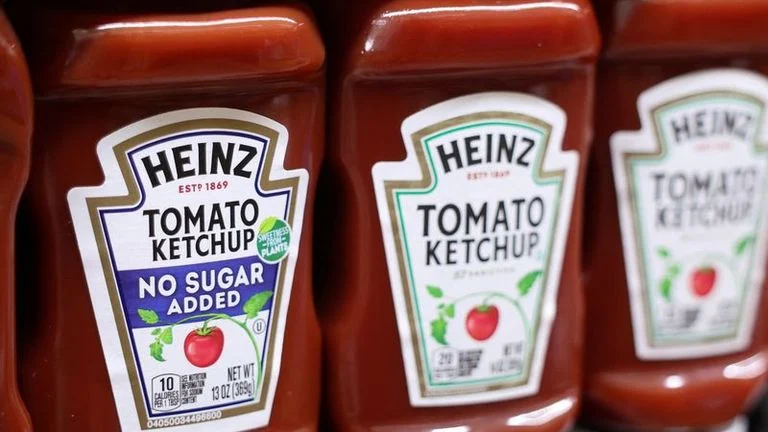

Strategic crossroads at the iconic food giant as leadership weighs division of the business or intensified focus on core brands
T he newly appointed chief executive of Kraft Heinz faces a consequential strategic decision: whether to pursue a full or partial corporate split or to double down on core brand reinvention and operational efficiency. The choice comes at a time of changing consumer preferences, pressure from investors, and intensifying competition in global packaged foods.
Industry analysts say the decision could reshape the future of one of America�s most recognizable food companies, affecting its portfolio, workforce, investor returns, and competitive positioning in a market increasingly driven by innovation and premiumization.
CEO�s Strategic Crossroads: Split or Strengthen?
The incoming CEO inherited a company with deep heritage but mixed financial performance. Kraft Heinz, with an expansive portfolio including deli meats, condiments, snacks, and refrigerated foods, has been under scrutiny from investors seeking better growth and profitability. After years of cost cutting and a focus on shareholder returns, some stakeholders argue that breaking the company into more focused units could unlock value and speed strategic execution.

Proponents of a split argue that independent business units could operate with greater agility, respond faster to emerging trends, and attract specialized investment. For example, Kraft Heinz�s refrigerated products division may target health- and convenience-oriented consumers differently from legacy shelf-stable brands, which rely on traditional price competition and scale.
However, other executives and analysts caution that fragmentation could dilute the company�s brand strength, increase operating costs, and weaken purchasing leverage across categories. For some, the more prudent path is to double down on core capabilities, invest in marketing and innovation, and streamline operations to support long-term growth. In recent quarters, Kraft Heinz has pursued initiatives aimed at refreshing heritage brands through reformulation, packaging redesign, and expanded marketing. Still, the company�s growth has lagged behind peers that have rapidly embraced premium, better-for-you, and direct-to-consumer offerings.
What a Split Could Mean for the Market
A corporate split is not unprecedented in the food and beverage industry. Large conglomerates have, at times, divested or separated units to sharpen strategic focus and improve investor returns. If Kraft Heinz were to divide its business, analysts say potential scenarios include separating refrigerated foods from shelf-stable products, or carving out international operations as distinct entities.
Investors who track the company�s performance say a breakup could unlock hidden value in underappreciated segments and attract strategic partners or private-equity interest. Freed from the constraints of a large conglomerate structure, smaller units could tailor strategies to their specific categories and customer bases.
Yet splitting a company carries risks. Operational redundancies could increase costs, and the company might lose scale advantages that help negotiate with suppliers and retailers. Market timing also matters: executing a breakup during a downturn could depress valuations rather than enhance them.
Why Doubling Down Still Appeals
For many inside Kraft Heinz and among analysts who remain bullish on the company�s potential, doubling down on core assets is a strategic priority. This approach emphasizes brand revitalization, innovation investment, distribution expansion, and supplier partnerships to better meet modern consumer demands.
Premiumization�where customers pay more for perceived higher quality or unique attributes�could be a key growth driver. Kraft Heinz has already made efforts in this direction with upscale versions of legacy products and acquisitions of smaller, trend-oriented brands. Doubling down involves accelerating these moves and integrating them more deeply into the company�s core portfolio.
Additionally, operational improvements such as supply chain efficiency, digital transformation, and data-driven marketing could drive margin improvement without sacrificing scale advantages. Supporters of this strategy argue that the company�s full portfolio, if managed cleverly, still holds competitive potential.
Pressure from Investors and Wall Street
Shareholders have pushed Kraft Heinz�s leadership to deliver more consistent growth and higher returns. Some activist investors have explicitly called for strategic alternatives, including asset carve-outs or portfolio reshaping. Others favor internal transformation that preserves scale while improving performance.
Wall Street�s response to Kraft Heinz�s recent performance has been mixed. While some analysts see long-term potential in reinvigorating core brands and leveraging global distribution, others have warned that without bolder strategic moves�such as a split�the company could continue to underperform in comparison to faster-growing competitors. Investors now closely watch the CEO�s next steps, particularly ahead of quarterly earnings releases and strategic investor presentations.
Consumer Trends and Competitive Pressures
Consumer tastes have shifted significantly over the last decade. Where legacy brands once dominated dinner tables, today�s shoppers increasingly gravitate toward fresh, organic, locally made, or functional food products. Competition from nimble startups and private-label premium offerings has challenged traditional packaged food giants like Kraft Heinz.
Doubling down may require deeper investments in product innovation and shopper insights to remain relevant. This could entail reformulating classic products with cleaner labels, reduced sodium or sugar, and clearer nutritional messaging�strategies that many faster-growing brands have successfully used. Meanwhile, a split could allow separate units to more aggressively pursue category-specific strategies without being tied to a centralized portfolio that spans diverse consumer expectations.
Leadership Challenges Ahead
The new CEO has inherited not just a strategic choice but a complex organizational culture shaped by decades of mergers, acquisitions, and restructuring. Analysts say successful implementation of either path�whether a split or a deeper operational refocus�will require strong leadership, clear communication, and careful execution.
Operational overhaul or organizational restructuring could affect thousands of employees, supplier contracts, and retail partnerships. Therefore, company leadership will need to balance urgency with deliberation, ensuring stakeholders understand the rationale behind bold moves.
Industry observers say that the CEO�s credibility with employees and investors will be tested by how transparently leadership manages the transition period�especially if public expectations diverge from long-term realities.
Kraft Heinz is expected to outline strategic priorities in upcoming investor forums and earnings disclosures, but observers caution that any major decisions will take time and extensive board consultation. Some analysts predict an initial announcement of a strategic review, followed by phased implementation of key initiatives. For now, the strategic choice comes down to whether Kraft Heinz continues to leverage its scale and heritage brands with fresh investments, or recalibrates its structure through a split that could create more focused business units. Either path signals a turning point for the company and reflects broader challenges facing legacy consumer goods firms in a rapidly evolving marketplace. As legacy brands navigate modern consumer expectations, the CEO�s decision could have wide-ranging implications�not just for Kraft Heinz�s bottom line, but for its long-term competitiveness and relevance.