

D onald Trump has declared that he will raise tariffs on South Korean imports to 25%, accusing Seoul of "not living up" to a trade agreement negotiated last year. President Donald Trump announced on Monday that he would raise tariffs on South Korean vehicles and other items imported into the United States, blaming an ally and major trading partner's legislature for failing to enforce a deal reached last year. In a social media post, Mr. Trump announced that the United States will raise its duty on South Korean imports from 15% to 25%, as well as duties on the country's autos, lumber, and pharmaceuticals.
Trump stated that South Korean lawmakers have been hesitant to accept the deal, although "we have acted quickly to reduce our TARIFFS in accordance with the Transaction agreed upon." Trump stated that because South Korea's legislature had not passed the agreement, "I am hereby increasing South Korean TARIFFS on Autos, Lumber, Pharma, and all other Reciprocal TARIFFS, from 15% to 25%. " It was unclear when the raise would take effect.
Why This News Matters:
This isn't just a trade disagreement between governments; it could also hurt people's wallets. Raising tariffs on South Korean cars and other goods can make things more expensive for customers, put jobs in the auto industry at risk, and make things less predictable for businesses that need stable trade laws. The move also shows how quickly political disagreements can hurt the economy, even between friends.
Background of the US–South Korea Trade Deal
Last October, Seoul and Washington concluded an agreement that included South Korea's vow to invest $350 billion (£256 billion) in the United States, with some of it going toward shipbuilding. Last July, Trump and South Korean President Lee Jae Myung agreed to invest $350 billion in the US in exchange for a promise to reduce tariffs on Korean exports. Trump reaffirmed the terms on October 29, 2025, while in Korea. The following month, the two countries agreed that the US would lower duties on some imports once South Korea began the process of approving the agreement. The agreement was submitted to South Korea's National Assembly on November 26 and is now under consideration. Local media reports that it will most likely pass in February.
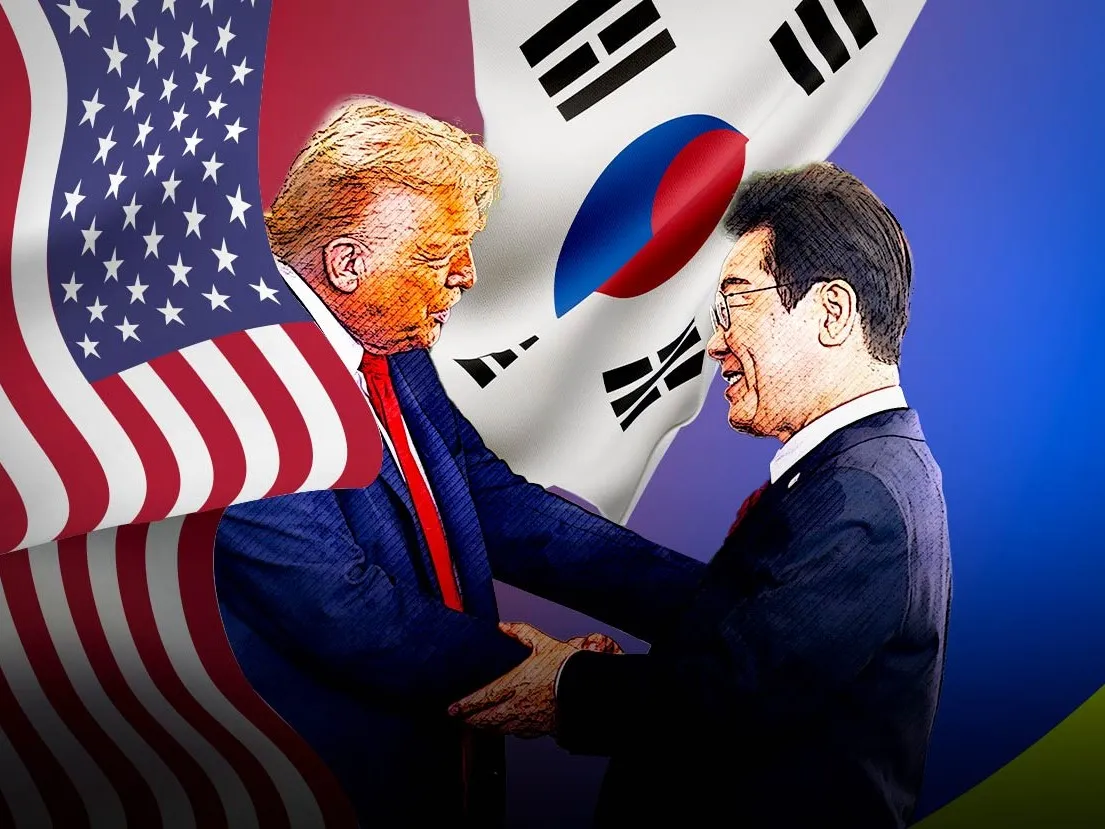
Following their leaders' agreement last year, Washington and Seoul reduced tariffs on U.S. imports of Korean vehicles and auto components from 25% to 15%, putting them on line with their Japanese competitors. The 15% rate became effective on November 1. Last year, South Korea agreed to spend $350 billion in vital areas in the United States. In order to ensure won stability, $200 billion would be paid in cash in progressive amounts of no more than $20 billion per year.
South Korea’s Response
South Korea says it wasn't officially told about the plan to put duties on some of its imports and asked for talks with Washington right away. Officials in Seoul said they were surprised by South Korea's decision, which is the latest setback as the country tries to balance its alliance and economic connections with the US while dealing with Trump's demands, which could threaten its security and financial stability.
The Blue House, the South Korean president's official residence, said it had not been officially told about the US tariff hikes. However, the president's adviser would meet with the ministries that were worried to talk about what to do. It also said that Kim Jung-kwan, South Korea's Industry Minister, who is currently in Canada, will go to Washington as soon as possible to meet with Howard Lutnick, the US Commerce Secretary. The Blue House says that the industry minister, who is currently in Canada, will soon go to the United States to meet with Secretary of Commerce Howard Lutnick. A spokesperson for South Korea's ruling Democratic Party did not respond right away. On February 3, the country's parliament will meet again, and that's when bills are usually voted on.
Market and Economic Impact
South Korea's benchmark Kospi stock index dipped on Tuesday morning, but was up nearly 1.8% later in the day as shares in big exporters recovered. South Korea's benchmark KOSPI index dropped 1.19% before recovering to trade 1.3% higher, as the won declined 0.5% against the dollar. Higher tariffs will disproportionately harm South Korean automaker Hyundai Motor and its affiliate Kia, with their shares first plunging 4.8% and 6%, respectively, before recovering.
South Korea's exports reached a record $709.4 billion in 2025, up 3.8% from 2024. U.S.-bound shipments were $122.9 billion, down 3.8% but still the second-largest market behind China. Auto exports to the United States totaled $30.2 billion, or 25% of total shipments. The likelihood of huge currency withdrawals has generated concerns for Seoul policymakers, as the won has fallen to levels not seen since the global financial crisis of 2007-2009.
Legal and Political Uncertainty
Throughout his second term in office, Trump has repeatedly utilized tariffs as leverage to implement foreign policy. Since the start of his second term in 2025, Trump has upended global trade by putting tariffs on almost every country. On Saturday, he threatened Canada with a 100% tariff if it reached a trade agreement with Beijing. Prior to that, Trump stated that he would impose import fees on eight countries, including the United Kingdom, that rejected US ambitions to acquire Greenland. He eventually backed down on the tariff threat against Greenland, citing progress toward a "future deal" on the island.
The Supreme Court is anticipated to rule shortly on the validity of the Trump administration's country-specific tariffs levied under the International Emergency Economic Powers Act. If they are overturned, White House officials have stated that they will turn to other powers to successfully replace the sweeping levies. According to Josh Lipsky, head of international economics at the Atlantic Council, Trump's action reflected his dissatisfaction with the pace at which Seoul is implementing the framework trade deal. "It's just another reminder that the markets were wrong to believe we were going to get into tariff stability in 2026," Lipsky said.


.webp)