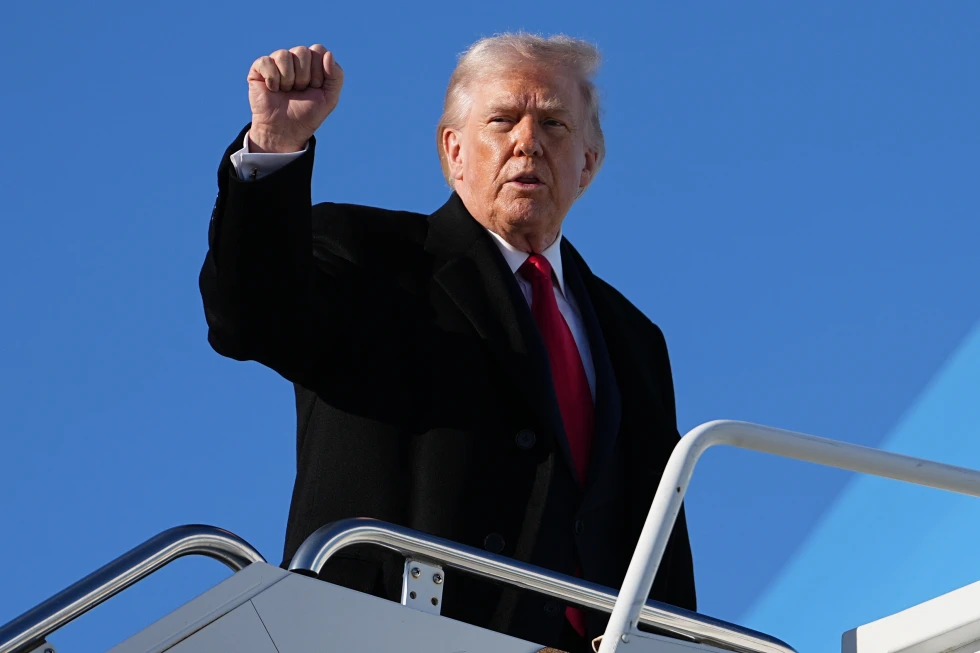


T he administration of Donald Trump has taken a decisive step in reshaping U.S. environmental and automotive policy, as the Environmental Protection Agency formally ended federal emissions limits that had governed fuel efficiency and greenhouse gas standards for American automakers. The move marks one of the most consequential regulatory reversals in recent years and sets the stage for legal battles, state-level pushback, and renewed uncertainty across the auto industry.
The decision, announced by the Environmental Protection Agency , eliminates nationwide requirements that were designed to steadily reduce vehicle emissions and improve fuel economy. Supporters of the rollback argue that the previous standards were overly burdensome, raised vehicle prices, and constrained consumer choice. Critics counter that the change weakens climate protections, undermines long-term industry planning, and risks fragmenting the U.S. auto market into competing regulatory zones.
A major policy shift
Under the previous framework, automakers operating in the United States were required to meet increasingly strict emissions and fuel-efficiency targets over time. These rules were aimed at cutting carbon pollution, reducing oil consumption, and accelerating the adoption of cleaner vehicle technologies. The Trump administration has long argued that those standards were unrealistic and economically harmful, particularly for manufacturers producing trucks, SUVs, and other larger vehicles that dominate U.S. sales.
In announcing the rollback, administration officials said the move would “restore common sense” to vehicle regulation and provide relief to an industry facing rising costs, global competition, and rapid technological change. According to EPA leadership, loosening federal requirements gives manufacturers greater flexibility to design vehicles that align with market demand rather than regulatory mandates.
“This action puts consumers first,” EPA officials said, emphasizing affordability and job protection in the U.S. auto sector. The administration has repeatedly framed environmental deregulation as a way to strengthen domestic manufacturing and reduce what it describes as regulatory overreach.
Automakers caught in the middle
For United States automakers, the rollback presents both opportunities and challenges. On one hand, relaxed federal standards could lower compliance costs and reduce pressure to rapidly shift production toward electric or hybrid vehicles. On the other, the absence of clear nationwide rules introduces uncertainty—especially as several states move to maintain or expand their own emissions requirements.

Major automakers have spent years investing billions of dollars in cleaner technologies, partly in response to earlier regulations and partly due to global market trends. Many companies operate across Europe, Asia, and North America, where emissions rules are generally becoming stricter, not looser. As a result, some industry leaders have expressed concern that rolling back U.S. standards could complicate long-term planning rather than simplify it.
Privately, executives worry about a fractured regulatory system in which different states impose different requirements, forcing manufacturers to build multiple versions of the same vehicle or limit sales in certain markets. Publicly, companies have been cautious, balancing their desire for regulatory relief with the need to avoid alienating environmentally conscious consumers and investors.
State rules remain a flashpoint
Perhaps the most immediate consequence of the EPA’s decision is renewed conflict with states—most notably California —that have historically set their own vehicle emissions standards under special federal waivers. California and a coalition of aligned states have signaled that they will continue enforcing stricter rules, arguing that states have both the legal authority and the responsibility to protect public health and address climate change.
State officials have sharply criticized the federal rollback, calling it a step backward that threatens air quality and environmental progress. Governors and attorneys general from multiple states have indicated they are prepared to challenge the EPA’s move in court, setting the stage for prolonged legal battles that could take years to resolve.
If courts side with the states, automakers could once again find themselves navigating dual standards—one federal, one state-level—similar to regulatory disputes seen in previous administrations. If the federal government prevails, states could lose a powerful tool they have used for decades to drive environmental policy.
Legal challenges loom
Legal experts widely expect lawsuits to follow the EPA’s decision. Environmental groups, public-health organizations, and state governments argue that the rollback violates federal law by failing to adequately consider environmental and health impacts. They also contend that the agency did not properly justify abandoning standards that were already in place and supported by extensive scientific research.
Supporters of the rollback argue that the EPA has broad discretion to revise or repeal regulations and that courts should defer to the agency’s judgment. They also point to economic analyses suggesting that looser standards could save consumers money and reduce regulatory costs for manufacturers.
The outcome of these legal battles could shape U.S. environmental policy for years, potentially extending well beyond the current political cycle. Until courts weigh in, uncertainty is likely to persist across the industry.
Climate and environmental implications
Environmental advocates warn that ending federal emissions limits will slow progress on climate change at a critical moment. Transportation is one of the largest sources of greenhouse gas emissions in the United States, and vehicle standards have been a central tool in reducing pollution over the past decade.
By weakening those standards, critics argue, the U.S. risks falling behind other major economies that are accelerating the transition to cleaner transportation. They also warn of increased health risks, particularly in urban and low-income communities already burdened by air pollution. The Trump administration has rejected these arguments, maintaining that technological innovation—not regulation—should drive environmental progress. Officials have emphasized voluntary improvements, market competition, and consumer choice as better mechanisms for reducing emissions over time.
Political dimensions
The rollback fits squarely within Republican Party priorities of deregulation and limited federal oversight, while drawing fierce opposition from Democratic Party lawmakers who see the move as an attack on climate policy and states’ rights.
Democratic leaders in Congress have pledged to reverse the decision through legislation or future executive action if political control shifts. Some have also called for stronger federal standards than those that existed before the rollback, framing the issue as central to economic competitiveness and environmental responsibility.
The issue is also likely to feature prominently in upcoming election campaigns, as climate policy and industrial regulation continue to divide voters along partisan lines.
Industry adaptation and the road ahead
Despite the regulatory shift, many analysts believe the long-term trajectory of the auto industry will continue toward electrification and lower emissions, driven by global trends, consumer preferences, and international regulations. Electric vehicle adoption is rising, and major manufacturers have already committed to expanding their EV lineups regardless of U.S. federal policy.
However, the pace of that transition could slow domestically if federal incentives and standards weaken. Smaller manufacturers and suppliers, in particular, may struggle to adapt to a regulatory environment that is both uncertain and politically volatile. In the near term, automakers must weigh how much to rely on the new federal flexibility versus preparing for potential future reversals. With lawsuits pending and elections on the horizon, few in the industry view the current rules as settled.
A familiar regulatory cycle
The EPA’s decision underscores a broader pattern in U.S. environmental policy, where regulations often swing dramatically between administrations. Each shift creates winners and losers, but also long-term challenges for industries that require stability to plan investments measured in decades, not years.
As courts, states, and future administrations weigh in, the rollback of emissions limits may prove less a final decision than another chapter in a continuing struggle over how the United States balances economic growth, environmental protection, and federal authority.
For now, the Trump administration’s move has reset the debate—loosening federal controls while opening the door to state resistance and legal confrontation. The outcome will shape not only the future of U.S. automakers, but also the country’s role in addressing one of the defining policy challenges of the modern era.