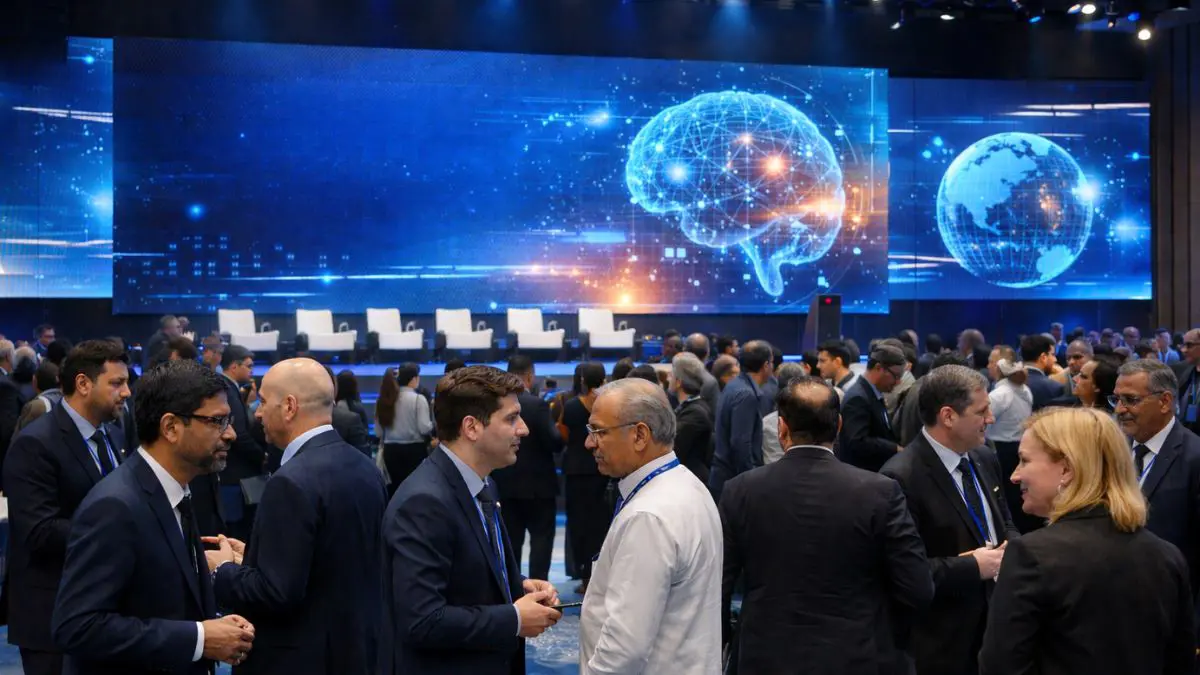
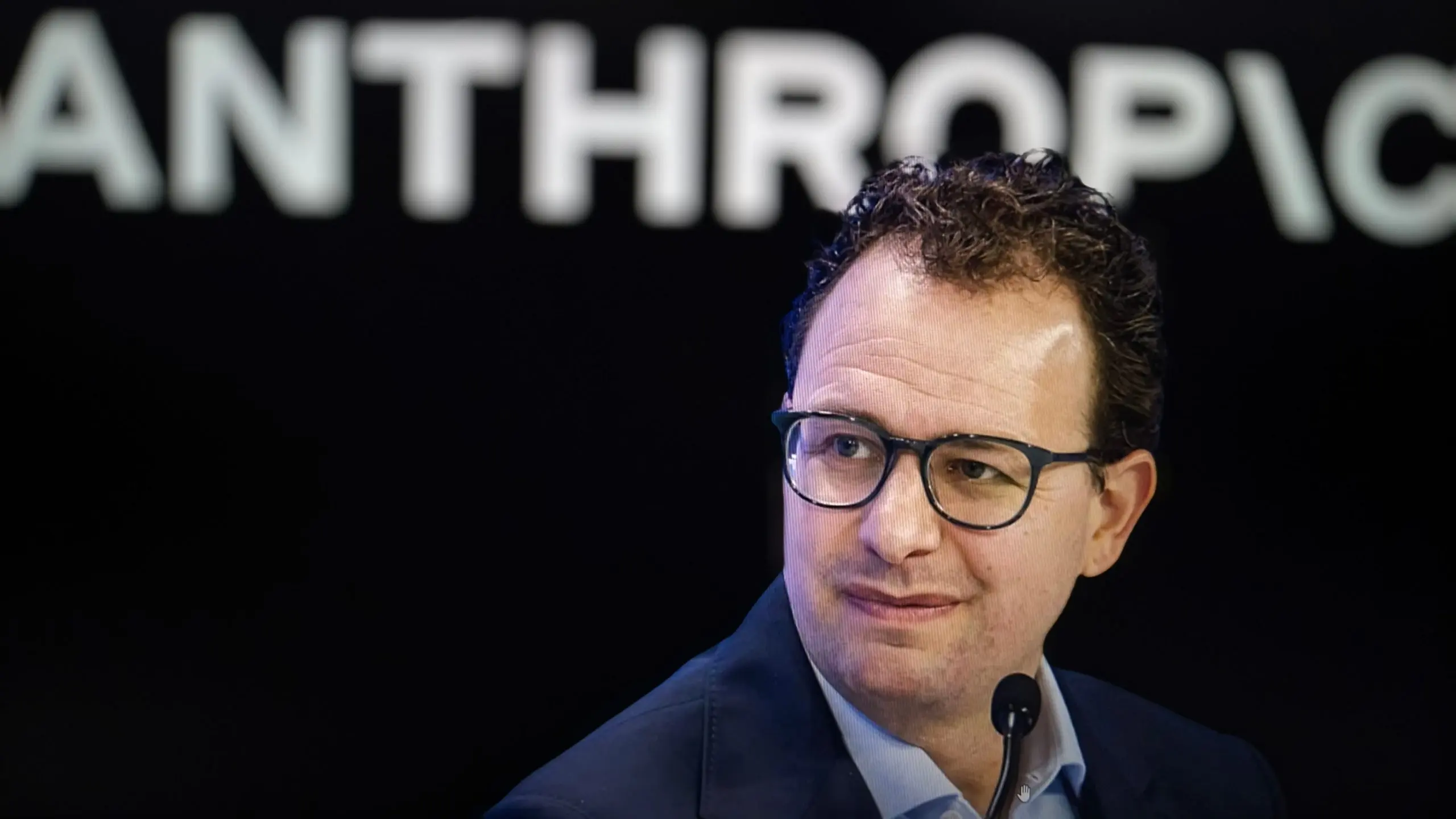

A nthropic CEO Dario Amodei said Tuesday that US companies such as Nvidia should not sell powerful artificial intelligence chips to China, describing the move as a massive error with incredible national security implications. Amodei, known for his grim warnings about the potential misuse of AI models, came out weeks after the Trump administration announced that Nvidia may continue selling its powerful H200 processors to China, with the US government receiving 25% of the proceeds.
“We are many years ahead of China in terms of our ability to make chips, so I think it would be a big mistake to ship these chips,” Amodei told Bloomberg during an interview at the World Economic Forum in Davos, Switzerland. "I think this is crazy," he continued. "It's a bit like selling nuclear weapons to North Korea." The US IT sector and China are involved in a winner-take-all battle to create more powerful AI models in the hopes of obtaining artificial general intelligence – a model with cognitive abilities comparable to humans. Critics argue that granting China access to the greatest processors will eliminate the United States' competitive advantage.
Anthropic CEO Dario Amodei warns that allowing Nvidia to sell advanced AI chips to China is a major national security risk for the US.
Despite these worries, Nvidia and its CEO Jensen Huang have lobbied strongly in favor of removing export restrictions, claiming that if China is unable to obtain chips created in the United States, it will just manufacture its own. Amodei claimed that the previous US ban on the sale of powerful AI processors was "the thing that is holding them back." "They've said it themselves," he explained. “The CEOs of these [Chinese] companies say ‘it’s the embargo on chips that’s holding us back.’ They explicitly say this.” The Anthropic boss called on the Trump administration to rethink its easing of export controls, stating “I hope they change their mind.”
Why This News Matters:
Dario Amodei, the CEO of Anthropic, is very worried that the US will let Nvidia sell China AI chips that are very powerful. He says it's a "huge mistake" that puts the safety of the country at risk. His words show that the US and China are getting more concerned about the balance of power between the two countries and the growth of AI.
Amodei is worried about more than just chips; he believes that AI could change the job market and society as a whole. Amodei and Demis Hassabis of Google DeepMind are two leaders who want countries to work together to make rules that will stop AI from growing too quickly and hurting people.
Geopolitical Implications of AI and Labor Disruption
Dario Amodei says that the hazards to national security of selling A.I. chips to China are much greater than the benefits of expanding U.S. technology around the world. The founder and CEO of Anthropic is against new rules that say that these kinds of transactions are a method to bring the technology of top U.S. businesses, like Nvidia, into global ecosystems.

Amodei remarked, “Are we going to sell nuclear weapons to North Korea because that produces some profit for Boeing?” while addressing at the World Economic Forum in Davos, Switzerland, today (Jan. 20). “That analogy should make clear how I see this trade-off—that I just don’t think it makes sense.”
The Trump administration has relaxed some of the rules against exporting A.I. chips in the past few months, partly because Nvidia CEO Jensen Huang lobbied for it. Amodei says that this rollback offers A.I. executives less time to learn about how the technology is changing, how it affects society, and the risks that emerging technologies pose to our very existence. He said, “The reason we can’t [slow down] is because we have geopolitical adversaries building the same technology at a similar pace,”
DeepMind and Anthropic CEOs Discuss AI's Societal Impact
Demis Hassabis, CEO of Google DeepMind, agreed with Amodei on the necessity for a more nuanced approach to A.I.'s geopolitical concerns at a Davos panel discussion. When it comes to developing safety standards, international cooperation between nations such as the United States and China is "vitally needed," according to Hassabis. Hassabis also stated that his concerns extend beyond governments to academia. He stated that he is "constantly surprised" by how few economists and scholars are properly investigating the effects of artificial intelligence on issues such as job displacement and income inequality. Hassabis stated that in order for A.I. to be successfully used in society, the technology's evolution must slow. However, achieving that slowness "would require some coordination." Both Amodei and Hassabis stated that they are already experiencing A.I.'s impact on the job market within their own organizations.
Both executives believe that the job market will eventually adjust, including the emergence of new AI-enabled positions. Nonetheless, Hassabis emphasized that work is about more than money. Questions about the relationship between meaning and purpose in work are among those "that keep me up at night," he added, adding that the financial consequences of labor disruption are easier to fix "than what happens to the human condition, and humanity as a whole."
Predictions on AI’s Labor Market Impact
While the CEOs of Anthropic and Google DeepMind generally agree on the geopolitical, socioeconomic, and labor consequences of artificial intelligence, they disagree on the timetable. Amodei believes that A.I. could achieve the capabilities of a Nobel laureate within a few years. According to Hassabis, the chances of human-level AI by the end of the decade are 50 percent.
Nonetheless, both agree that neither timescale allows much time for businesses, authorities, or governments to devise a coordinated response to the technology's rising influence. “There isn’t a lot of time before this comes,” stated Hassabis.
AI leaders want global rules to control AI growth and reduce risks.
Early Signs of AI's Labor Market Impact
AI may not be causing a labor market slaughter, but executives at Google DeepMind and Anthropic believe they are beginning to see its impact on junior roles within their own organizations.
"I think we're going to see this year the beginnings of maybe it impacting the junior level," said Google DeepMind CEO Demis Hassabis during a joint interview with Anthropic CEO Dario Amodei at Davos on Tuesday. "I think there is some evidence, I can feel that ourselves, maybe like a slowdown in hiring in that," he said, citing entry-level positions and internships as vulnerable examples.
Amodei seemed to agree. Last year, the Anthropic CEO predicted that AI would eliminate half of all entry-level white-collar positions and raise unemployment to 20%. As of Tuesday, his prediction remains unchanged. "Now I think maybe we're starting to see just the little beginnings of it, in software and coding," he added. "I can see it within Anthropic, where I can look forward to a time where on the more junior end and then on the more intermediate end we actually need less and not more people." He went further: "And we're thinking about how to deal with that within Anthropic in a sensible way."
Amodei and Hassabis have both warned that the possible influence of AI on the economy and labor markets may necessitate institutional change, perhaps through international institutions controlling AI and economic intervention, in order to avoid the most severe consequences. "My worry is as this exponential keeps compounding, and I don't think it's going to take that long — again, somewhere between a year and five years — it will overwhelm our ability to adapt," Amodei told CNN.