
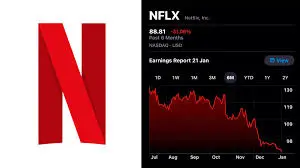
N etflix (NFLX.O) shares dipped in early trading on Wednesday, despite exceeding forecasts for fourth-quarter sales and earnings, as the business continues involved in a bidding war for Warner Bros Discovery (WBD.O).
Netflix also announced that it would pause share buybacks in order to raise funds for the Warner acquisition. By 0714 GMT, shares had dropped 7%. The shares fell 0.8% in Tuesday's regular session. Netflix stock has lost almost 20% of its value since the company announced its offer for Warner Brothers in early December. Netflix announced on Tuesday that it had hit 325 million global paid customers, a new record for the streaming behemoth, which last published membership figures a year ago. The company posted fourth-quarter earnings and revenue that just above Wall Street expectations. Here's how Netflix performed in the period ended December 31, compared to estimates from analysts polled by LSEG:
- + Earnings per share: 56 cents compared to 55 cents, anticipated
- + Revenue: $12.05 billion compared to $11.97 billion, projected
Net income for the fourth quarter was $2.42 billion, or 56 cents per share, up from $1.87 billion, or 43 cents per share, in the same time last year. Netflix reported an 18% year-over-year rise in revenue during the period, driven by membership growth, greater subscription price, and increased advertising revenue. In recent years, Netflix has concentrated on expanding its ad-supported membership tier. Netflix introduced its ad-supported service in late 2022. On Tuesday, it reported that ad income in 2025 increased by more than 2.5 times that of 2024, reaching more than $1.5 billion. The business estimates overall revenue in 2026 to be between $50.7 billion and $51.7 billion, owing to increases in membership and pricing, as well as "a projected rough doubling of ad revenue in 2026" compared to the previous year.
Why This News Matters:
The company's profits in the fourth quarter were better than expected, but they decided to stop buying back shares and go after Warner Bros. for $72 billion.
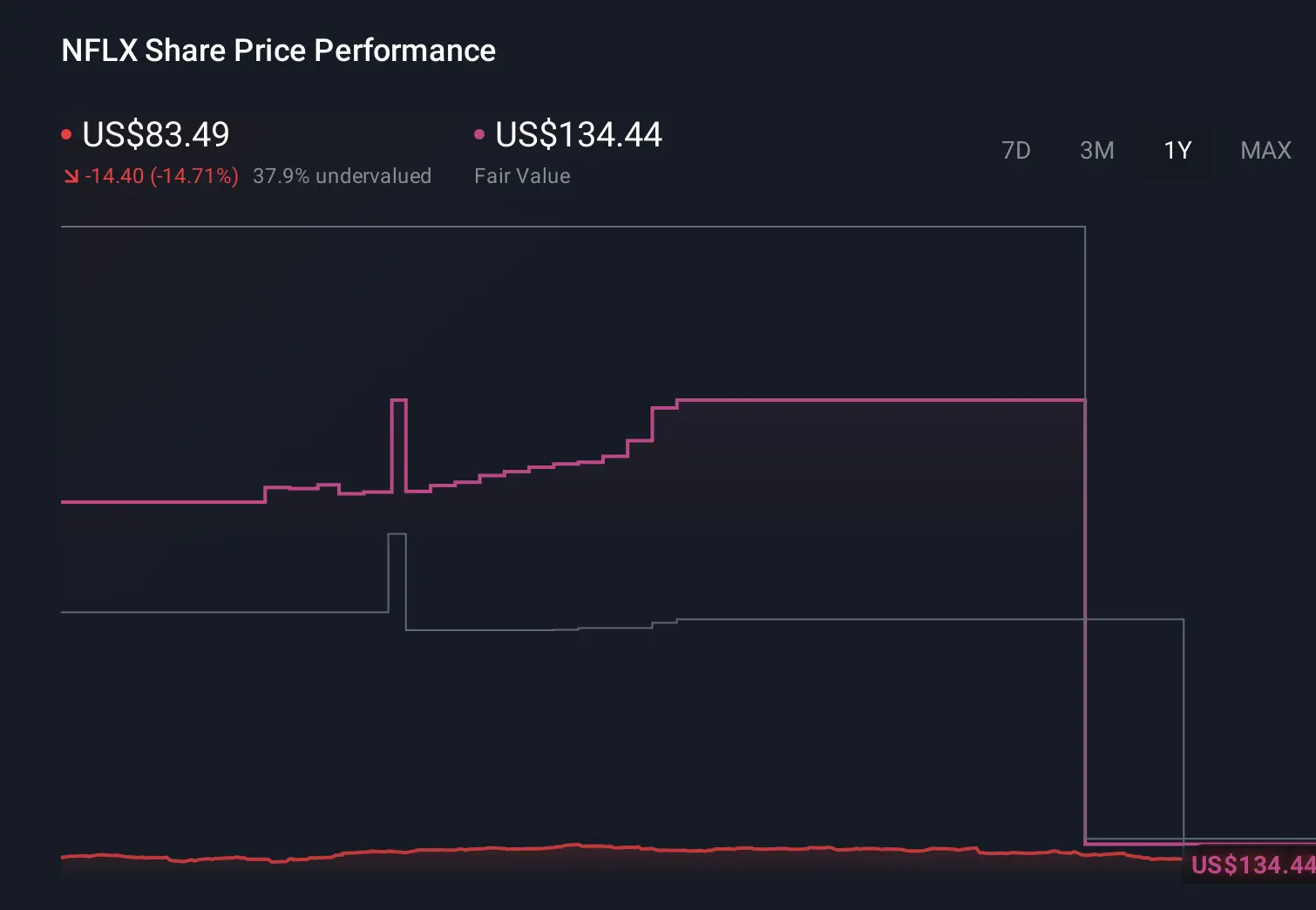
Investors are worried about Discovery, which is why shares fell 7%. This change means that Netflix is no longer doing things the way it usually does and is now looking for a big deal that could change the way it offers content. The drop in the stock price shows that the acquisition is still not clear and that it will have an impact on Netflix's finances. Still, the streaming giant's membership and advertising income are growing quickly, which could help it do well in the future.
Regulatory and Acquisition Process: Warner Bros. Discovery
Netflix's quarterly report is placed against the backdrop of its proposed acquisition of Warner Bros. Discovery's streaming and film production operations. In December, the business stated that it had reached an agreement to acquire HBO Max and the Warner Bros. film studio for $27.75 per WBD share, or $72 billion in equity.
Earlier on Tuesday, Netflix changed its offer to be all cash. The corporation announced Tuesday that it would suspend share repurchases to fund the acquisition. Netflix stated in its letter to shareholders that it expects the transaction will "allow us to accelerate our business strategy." Netflix stated that Warner Bros.' library, development, and intellectual property will allow it to expand its content selection for users, while HBO Max will assist it "offer more personalized and flexible subscription options."
However, the potential acquisition surprised the market because the streaming giant has long avoided industry consolidation and major transactions. Since October, when Netflix was originally believed to be interested in the assets, the company's stock has fallen by roughly 30%. And the proposed acquisition hasn't been without its challenges. Soon after announcing the partnership with Netflix, Paramount Skydance launched a hostile bid to buy the entire WBD. Lawmakers and business insiders have also questioned whether the Netflix purchase will receive the requisite regulatory approval. "We're working really hard to close the acquisition of Warner Bros. Studios and HBO, which we see as a strategic accelerant," Sarandos said during Tuesday's call. "And we're doing all this while we're driving and sustaining healthy growth."
Netflix has begun the regulatory process, according to Sarandos, and he is certain the firm will be able to obtain regulatory permission "because this deal is pro-consumer,... pro-innovation, and pro-worker." The corporation has frequently argued that the merger will save employment during a period of widespread cutbacks in the media. Sarandos stated on Tuesday that the Warner Bros. assets will add new businesses to Netflix's portfolio.
“We’re going to need those teams, these folks that have extensive experience and expertise. We want them to stay on and run those businesses,” Sarandos stated. "So, we're expanding content creation, not collapsing it in this transaction." Sarandos and Peters also emphasized the tremendous amount of competition in the media industry, which they stated spans multiple channels, including traditional TV and social media sites such as YouTube. According to CNBC, proving that Netflix is a little player in a vast competitive field will be critical to Netflix's argument to antitrust regulators.
Earnings Report and Stock Reaction
Netflix (NFLX) announced better-than-expected fourth-quarter earnings after the bell on Tuesday, but said it would increase the rollout of new content in the coming year and delay its share repurchase program due to its planned acquisition of Warner Bros. Discovery. The streaming behemoth posted revenue of $12.05 billion, exceeding Wall Street projections of $11.96 billion, according to Bloomberg consensus statistics, and matching the company's own prediction. In the fourth quarter of previous year, the corporation generated $10.25 billion in revenue. Earnings per share were somewhat better than expected, at $0.56, compared to the Street's projection of $0.55. That compares to Netflix's prediction of $5.45, or $0.55 per share, following the 10-for-1 stock split in mid-November. The company recently said that it had more than 325 million subscribers worldwide.
- Earnings beat expectations
- Revenue growth strong
- Content spending rising
- Stock fell premarket
Revenue for the full year was slightly higher than predicted, at $45.2 billion, compared to Wall Street's projection of $45.1 billion, reflecting a 16% increase for the year. Netflix announced Tuesday that its 2026 revenue is likely to fall between $50.7 billion and $51.7 billion, marking a 12%-14% increase. Netflix expects revenue to increase by 15.3% to $12.16 billion in the first quarter, with adjusted earnings of $0.76. That exceeds Wall Street's expectations of $10.54 billion and adjusted earnings of $0.66.
Its slower growth rate indicates that the firm may try to expand the launch of its own content in the coming year, while concern surrounding the Warner Bros. agreement impacted on the stock, which fell more than 5% in premarket trade on Wednesday. Netflix's shareholder letter stated that the second half of the year saw a 9% increase in original content consumption, but a decrease in non-branded content engagement. "This decrease primarily reflected a lower volume of licensed, second-run content across most regions following an elevated period of licensing during 2023-2024 as a result of the WGA strike, which temporarily shut down new production," the business stated in its letter. During a call with analysts, CFO Spencer Neumann stated, "You should see higher year-over-year content expense growth in the first half of '26, growing off of that smaller base that we had in the first half of last year."
Deal Details and Netflix’s Competitive Outlook
Before the market opened on Tuesday, Netflix said that it has revised its agreement to acquire Warner Bros. Discovery to an all-cash deal at $27.75 per WBD share, or $72 billion in equity value. In comparison, the Ellison family-backed Paramount Skydance (PSKY) made an all-cash offer of $30 per share, or $108 billion.
The Paramount offer includes the merged company's television and news holdings, whereas Netflix is solely bidding on Warner Bros.' film and streaming assets. When asked by Guggenheim analyst Mike Morris on the call if Netflix planned to raise rates, co-CEO Gregory Peters answered, "There is no impact or change to our approach and how we're running the business in that regard."
It also intends to continue the usual launch of Warner Brothers pictures, with a 45-day window in theaters before moving to streaming. When asked about regulatory permission, Netflix co-CEO Ted Sarandos stated, "We've already made progress towards securing the necessary regulatory approvals." He continued, "Our deal strengthens the marketplace, and it ensures healthy competition that will benefit consumers and protect and create jobs. That's why we're confident in the approval."